Monday, May 23, 2016

Week 9 -- Space + Art

            Space and Art are both exciting fields that push the bounds of human intelligence and creativity. Both require thinkers who are able to experiment with the unknown to bring to light amazing new creations both in space and art. We can see these crossroads in the Leonardo Space Art Project that aims to bring together artists, engineers, and scientists all interested in space projects for them to exchange ideas and resources (Leonardo).
The Fountains of Paradise
As learned from lecture, some ideas that we are experimenting with in space originated from artistic mediums. For example, the idea of a space elevator originally stemmed from Arthur C. Clarke’s novel, The Fountains of Paradise. This was merely a science fiction work, however has sparked interest in actually creating a space elevator made out of carbon nanotubes to help create easier access to space (Vesna). Art has been able to influence space, however this is not a one-sided relationship.
Apollo 13
From space exploration stemmed new artistic works including the movie, Apollo 13 based on the craft that exploded due to a burst in the oxygen tanks. This work of art brought the public closer to the incident and portrayed the feeling and helplessness of the astronauts in space (Apollo).
Ever since our exploration in space, technological tools to explore this space have been developing at a more rapid pace and have become more easily accessible to the public and artists. New technologies such as time lapse webcams and super pressure balloons are putting more cameras into space and gaining more knowledge as to what is entailed in this vast space (Technology). A field of ‘space art’ has been created with breathtaking scenes of the galaxy and planets that I will embed below. Space Art. These artworks are breathtaking in the sense that we can only see these images through the use of powerful telescopes and artistic renderings. They cannot be seen by the naked eye.

Picture of Space
            In a sense, art is our only eye in space and the two work in conjunction to reveal the mysteries of the world and the galaxy beyond it.


References
"Apollo 13." IMDb. IMDb.com, n.d. Web. 24 May 2016.
"Leonardo Space Art Project." Leonardo Space Art Project. N.p., n.d. Web. 24 May 2016.
"Space-Art.Co.Uk - The Art of Mark A. Garlick." Space-Art.Co.Uk - The Art of Mark A. Garlick. N.p., n.d. Web. 24 May 2016.
"Technology Drives Exploration." NASA. NASA, n.d. Web. 24 May 2016.
Vesna, Victoria. Space and Art Lecture. Web. 24 May 2016.

Saturday, May 21, 2016

Event Post -- The Getty

After reading about Louis XIV in my past history class and his contribution to art throughout the Renaissance, I was in complete awe by the Getty’s exhibit of his artwork. The Renaissance was not only a time of artistic expansion, however it also bolstered mathematics and its use in art. As learned in lecture, the great Leonardo Da Vinci was an artist of this time. Not only did he create iconic works such as the Mona Lisa, but he also expanded on mathematical and geometric formulas. Math and art were on the rise and this theme is ubiquitous throughout the works of this time.
Double Desk
Pictured to the left is a Double Desk a piece that doubles for both mathematical and artistic
purposes. The sides of the desk may be lowered to become a writing surface with drawers and pigeonholes below. This shows the mathematical design in this piece in that it is able to double as a surface for working purposes. There is more to its intricate and grandiose design that parallels the work ethic of the Renaissance. Its hard surface as a working desk allows for writing on new papers and mathematical ideas.
Planisphere Clock
Another piece that exemplifies these crossroads in a dramatic work of art is the Planisphere Clock whose hands exhibit the different lunar, monthly and zodiac phases as well as the phases of the moon through its revolving dials. This art is beautifully crafted with gold trimmings and an extravagant size, however portrays this crossroads of science and art because it shows the French knowledge of space and time. This knowledge is incorporated into the art by the revolving dials and orbits.

Myself at the Exhibit
This art was especially interesting to me because it was so grand and flashy yet behind all the glamour, there was still hints of science and math. This is definitely something I want to expand on in my final paper is that art never comes alone – there is always some type of integration. I would definitely recommend this Getty exhibit to anyone who loves grand art with striking colors because it was truly fascinating to see how royalty lived and art flourished.

Event Post -- Fowler

As learned in lecture, CP Snow coined the separation of art and science. He considered it as two distinct fields – one that belonged to literary intellectuals and one that belonged to natural scientists. However, during my trip to Fowler Museum, I didn’t notice these two cultures. I have reached a point in this course where I view art in the lens of John Brockman and the Third Culture – or fusion of the two.
Russian Style Silver
Irish Style Silver
            As I was wondering around Fowler, I came to my favorite exhibit that portrayed this fusion of technology and art – Reflecting Culture: The Collection of Silver. This exhibit stems from the rise of silversmiths and the technology associated with this craft. Silversmiths had to use lung-powered blow pipes for soldering and annealing and had to use a myriad of tools to carefully craft the silver objects. From this, they were able to create beautiful pieces of silver that doubled as art and household items. What I found most interesting about this display was how the silver objects differed by country, portraying their different artistic styles. The Irish style incorporated a smoother surface and focused on the shine and simplicity of silver. This contrasted with the RussiaDisplaying IMG_7294.JPGn style that was moreDisplaying IMG_7294.JPG Displaying IMG_7294.JPGDisplaying IMG_7294.JPGembellished with stones and intricately carved designs.
Myself at the Exhibit

            This art parallels the development of technology and perfection of the craft as it spread across countries. This is so interesting to me because it makes me realize the subtle story behind each artistic piece and how it ultimately shows the technology and culture of its time. This is definitely something I would like to write about in my final paper because I feel as if I’ve reached this point where I am able to notice the story behind each work of art and I never knew my mathematically geared brain would be able to. I definitely recommend this exhibit to all my classmates who appreciate the more refined and metallic works of art because it will definitely challenge them to see beyond the art itself and into the culture of the work.

Event Post -- Hammer Museum

Spun Chairs
Me in the Spun Chairs
            The Hammer Museum was a joy to visit because I felt as if the art was more interactive and colloquial than at other museums. Upon walking in, I looked to my left and saw these Spun Chairs in which I was able to sit and roll around in this symmetric, pin-top chairs without falling off. Already, I fell in love with this exhibit and the math behind this artistic piece. It must have been designed in a way that despite the weight of the individual and force in which they roll, one cannot fall off. This interactive piece as a great exemplar of the crossroads between math and art because it shows the underlying geometry integrated into the piece to give it this safely rolling effect. I definitely recommend going to Hammer to the students who enjoy interactive art and who enjoy seeing art in more ordinary objects.

MacArthur Park
            As I continued throughout the museum, I entered the Contemporary Collection of normal, everyday objects and what caught my eye was MacArthur Park, a sculpture that included an amplifier, CD player, and moving green and yellow balls. It was an interesting piece in the idea that it resembled a robot. As learned in lecture, Karl Capek coined the term robot from the word robota, meaning work, with originally robots being anything that works in place of a human. We see this intersection of robots and art in this piece as it is powered by a motor that constantly keeps the yellow and green balls moving and the stereo playing. This technology replaces that of a human that would be manually controlling the piece, and give it its own freedom and autonomy. This piece spoke to me
because I see this shift in the world around me as technology is able to stand alone and no longer needs human guidance -- just as in this art piece. This is definitely a point I would like to discuss in my final paper because it leads me to question what the art of the future will be like, and if it will all be independent of human control.

Thursday, May 19, 2016

Nanotech + Art

Topographical Scanning Tunneling Microscope Image
      Nanotechnology is a recent field that exists on a minutely small scale. Richard Feynman portrays this idea with his phrase, “There’s always room at the bottom” (Gimsezki). Nanotechnology was only made visible to the eye by the Scanning Tunneling Microscope created in 1981. It works by using rasters across the surface of atoms to create a topographical map of the object (Scanning). Pictured to the left is an image of this that ultimately translates to an artistic piece. Ultimately, this piece underlies the foundation of nature and its unique shapes and patterns that comprise our world today. The bounds of reality begin to bend as we enter this realm of the more imaginary as we cannot conceptualize these images or what they mean.
Blurring of Reality with the
Nanoscale
Vesna and her coauthor, Gimzewski describe how nanotech and art collide to understand this idea. The blurring between real and the imaginary on the nano scale stimulate artistic interests as they venture into the unknown and attempt to understand it from different perspectives. Nanotech and art have this commonality where they both manipulate sensory perceptions (Gimsezki & Vesna). This world is no longer governed by the same physical rules witnessed in our everyday life.
Now, artists have found the art behind nanotech and have created a new medium for work. For example, Christian Orfescu works in a nanotech lab on lithium ion batteries, however works on his ‘nanoart’ after a long day’s work. He lets colors and shape-shifting run wild as he uniquely manipulates objects on the nanoscale (The). He has a nanoart webpage that has pictures of his beautiful nanolandscape, nanodesign, and nanosculpture designs that I will embed below:
One of Orfescu's Nanoart Pieces
Nanotechnology is quickly becoming integrated in our daily lives and hopefully its tools will become more available to artists to continue exploring this abstract form or art.


References
"The Art of Nanotech." Bits The Art of Nanotech Comments. N.p., n.d. Web. 19 May 2016.
"Cris Orfescu." Cris Orfescu. N.p., n.d. Web. 19 May 2016.
Gimzewski, Jim. Nanotech and Art Lecture. Web. 19. May 2016.
Jim Gimzewski & Victoria Vesna. "The Nanomeme Syndrome: Blurring of Fact & Fiction in the Construction of a New Science." The Nanomeme Syndrome: Blurring of Fact & Fiction in the Construction of a New Science. N.p., n.d. Web. 19 May 2016.
"Scanning Tunneling Microscopy." How an STM Works. N.p., n.d. Web. 19 May 2016.
Vesna, Victoria, and Jim Gimzewski. "The Nanomeme Syndrome: Blurring of Fact & Fiction in the Construction of a New Science." The Nanomeme Syndrome: Blurring of Fact & Fiction in the Construction of a New Science. N.p., n.d. Web. 19 May 2016.


Sunday, May 15, 2016

Event Post -- Masha's Pop Up Lecture

Me and Masha
Ishiguro and his Gemanoid
Masha’s presentation was centered on robots – gemanoids, humanoids, and androids. She was explicit in saying robots are here now and developing at a rapid pace. As learned from Vesna’s robotics lecture, the meaning of robot came from Karl Capek, and comes from the word robota, meaning work. Robots are anything that take the place of human work. John Ford portrayed this idea when he introduced the mechanization of assembly lines in the 1900s. But robots take on many shapes and sizes. Masha and Ishiguro create human-like robots must take into account the artistic aspects in order to make the robot look real and move with better harmony. Ishiguro is now onto his gemanoid version 4 (robot copy of himself) where now, the skin looks so real. Rather than having the porcelain look of most robots, the skin has all the pores and flaws of natural human skin. This artistic ability to mask all the complicated wires and computer systems under the mask of a normal human being is what makes these robots so intriguing. It left me questioning what is considered human!
Image result for blade runner
Masha's Favorite Movie
The idea of robots originally came from the arts and was a futuristic idea. First seen in the movies, most notably, Blade Runner and Bicentennial Man, it was a fictional idea that was widely viewed and idealized. However as technology began to expand and the collaboration of artists and engineers began to grow, as did our development in robots. Ishiguro, for example, originally wanted to be an artist, however was drawn to the idea that robots are a tool to help humans understand themselves -- and the android aspect was a mere byproduct of his fascination. This intersection between art and neuroscience as allowed for his aesthetically pleasing yet complex neuroscience.

I definitely want to integrate robots into my final project because they are beginning to become widely used and I want my idea to be at the forefront of this movement. It will soon be sweeping the U.S. like it has been to Japan. I recommend that students go to this event because it makes you realize how advanced and artistic robots truly are and how they are no longer an idea of the future. They are here now and will soon be a common sight.  

Wednesday, May 11, 2016

Week 7 -- Neuroscience + Art

MRI-Inspired Brain Sculptures
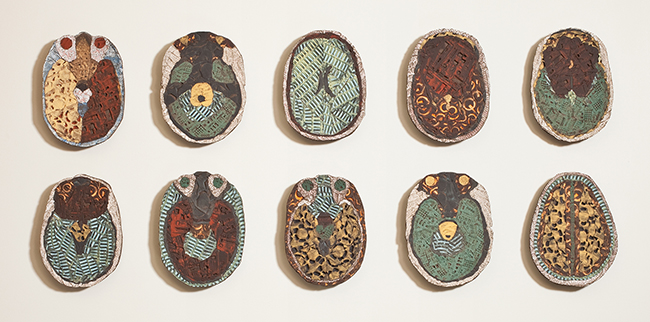
Neuroscience is a recent field of research that has been developing at a fast pace. As Roman Cajal said, this field breeds artists who seek creativity and the unknown. Roman Cajal and Franz Gall were two key people in showing how the brain functions (Vesna). Since their brain mapping and further development, many artistic pieces have stemmed from our better understanding of neuroscience. In the Stanford Imaging Center, for example, there is a sculpture of the layers of a brain scan and an etching of the hippocampus. (Artwork). The center is accessible to families and portrays how there is beauty behind the brain; as a culture, we are more welcoming and more aware of it.
As Giovanni Frazzetto and Suzanne Anker said in their article, there is an emerging ‘neuroculture’ where neuroscience is integrated in all aspects of life. It is in TV, diagnosing disorders, and it is readily available information that is commonly referenced (Frazzetto).
Painting by Alex Grey
A Beautiful Mind
It’s interesting to see now how these commonly diagnosed neurological disorders are viewed in a more artistic light. Take for example the movie, A Beautiful Mind, centered around a schizophrenic man. The movie has won countless awards, including the Academy Award for Best Picture (Awards). These mental disorders used to be dismissed in the past, and now center in movies and TV show dramas. They are not only portrayed in artistic mediums but incorporated in the 'neuroculture'. Neurological disorders and drugs that affect the way we think have influenced artists in countless ways as well. The famous artist, Alex Grey, known for his paintings of the body’s meridians and chakras, used LSD and claimed that it helped boost his creativity and was influential in creating his works (8). Neuroscience and art ultimately mix together in numerous ways. There are still so many unanswered questions in the field of neuroscience, and artists are at the forefront of creativity and excitement to find the answers.

References
"Artwork Inspired by MRI Brain Scans Installed at Stanford Imaging Center." Stanford News.    ssssssN.p., n.d. Web. 11 May 2016.
"Awards." IMDb. IMDb.com, n.d. Web. 12 May 2016.
Frazzetto, Giovanni, and Suzanne Anker. "Neuroculture." Science and Society 10 (2009): n. pag.          sssssWeb. 11 May 2016.
Vesna, Victoria. Lecture Neuroscience and Art. Web. 11 May 2016
"8 Famous People Whose Creativity & Innovation Was Inspired By LSD." Collective Evolution         ssssssRSS. N.p., n.d. Web. 11 May 2016.

Thursday, May 5, 2016

Week 6 -- Biotech and Art

Third Ear
The field of Biotechnology and Art faces a lot of criticism regarding ethics and genetic manipulation. As Ellen Levy ultimately highlights in her article, it is difficult to define life, and these classifications will bring about debates regarding legal rights, intellectual property, politics, and society as a whole. As we begin to blur what is human, transgenic, and cyborg there will ultimately be no status quo (Levy). This raises the question, “To what extent will we push human capability?” In this week’s lecture, Professor Vesna discussed Stelarc and how he wanted to use biotechnology to overcome human limitations. He experimented with human implants – by inserting a third ear in his arm. He claimed without further advancements, human body would become obsolete (Vesna).
 This idea is frightening to think about – with all the genetic engineering around us, where do we draw the line? If the modification proves no purpose for human betterment and is merely used as an artistic medium, should it be an allowed practice? Artists began to believe that labs were equivalent to their studios and freely experimented from creating robotic drawing arms to skin cultivated coats. Steve Kurtz founder of the Critical Art Ensemble, allegedly took this idea to far and questionably ended up killing his wife in the name of biotechnological experimentation. He was tried in court however, and was deemed not guilty (Steve).
Genetically Modified Food
This week’s lecture mostly discussed genetic injections in the lab, however society is very oblivious to the omnipotent biotechnology in our daily lives. 60% of the processed food on supermarket shelves contain some genetically modified ingredient (Altered). The FDA allows the use of steroid-hormone implants in our household meats (Producing).
Fluorescent (GFP) Bunny
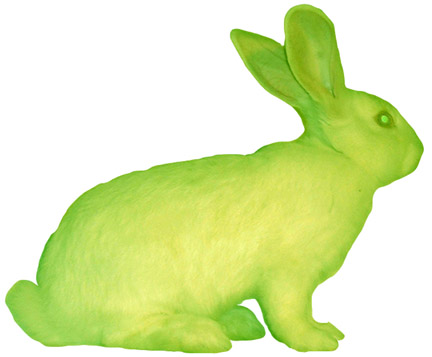
Biotechnology has infiltrated every aspect of life, however most notably, the medical. Take the fluorescent bunny – it served not only as an artistic medium but is useful in tracking active cancer treatments. Biotechnology and art, although controversial, is developing at a rapid pace and is a promising medium for both artistic and biological furtherment.


References
Levy, Ellen K. Defining Life: Artists Challenge Conventional Classifications. Web. 05 May      ssssss2016.
"Altered Food, GMOs, Genetically Modified Food - National Geographic." National ssssssGeographic. N.p., n.d. Web. 05 May 2016.
"Steve Kurtz." Wikipedia. Wikimedia Foundation, n.d. Web. 05 May 2016.
"U.S. Food and Drug Administration." Steroid Hormone Implants Used for Growth in Food-ssssssProducing Animals. N.p., n.d. Web. 05 May 2016.
Vesna, Victoria. Lecture Biotechnology and Art. Web. 05 May 2016.


Tuesday, May 3, 2016

Event Post -- LACMA

Lifting a 340 Ton Rock


Urban Lights
In the Urban Lights exhibit also at LACMA, which is a very famous contemporary art display, I was able to see the precision and geometry underlying art. The restored lamps are all perfectly lined up, and depending on the angle of the sun, cast consistent shadows onto the pavement. Urban Lights exhibit was featured in the movie, No Strings Attached and is featured in many photo shoots and even wedding proposals. I genuinely enjoyed LACMA and the beauty and new found appreciation for the precision of math and art to create something magical. I definitely recommend going to LACMA for my fellow classmates who appreciate the math behind art.

Natalie Portman and Ashton Kutcher in
No Strings Attached
As a South Campus major taking an art class, I am very fascinated in the interplay between the two disciplines of math and art. Therefore, I took this event assignment to visit LACMA for the first time where I saw the mathematical ideas of perspective and angle to create the 340 ton sculpture, Levitated Mass. It is given this name because depending on where you stand in the concrete trench, you can create an optical illusion as to make it appear if the rock is floating -- or in my case, I have the strength to lift it up. The artist, Michael Heizer, hid the support hinges below this piece to create this effect. It took me a couple of tries to get the perspective correctly, where the rock was far enough behind to appear as if it was merely propped up onto my hands. This sculpture is interesting because not only does it combine math and art, but it is an interactive art.
This is an idea that I would like to incorporate into my final project because I feel like it brings a more  exciting aspect to the piece. I enjoy looking at art, however I have never approved of the, “Look but don’t touch” motto. Considering this, I would like a project that is interactive, or rather personalized to the user, as was the “Perfect Portrait” makeup kit mentioned in my midterm PowerPoint.


.