 |
| Topographical Scanning Tunneling Microscope Image |
Nanotechnology is a recent field
that exists on a minutely small scale. Richard Feynman portrays this idea with
his phrase, “There’s always room at the bottom” (Gimsezki). Nanotechnology was only made visible to the eye by the Scanning
Tunneling Microscope created in 1981. It works by using rasters across the surface of
atoms to create a topographical map of the object (Scanning). Pictured to the
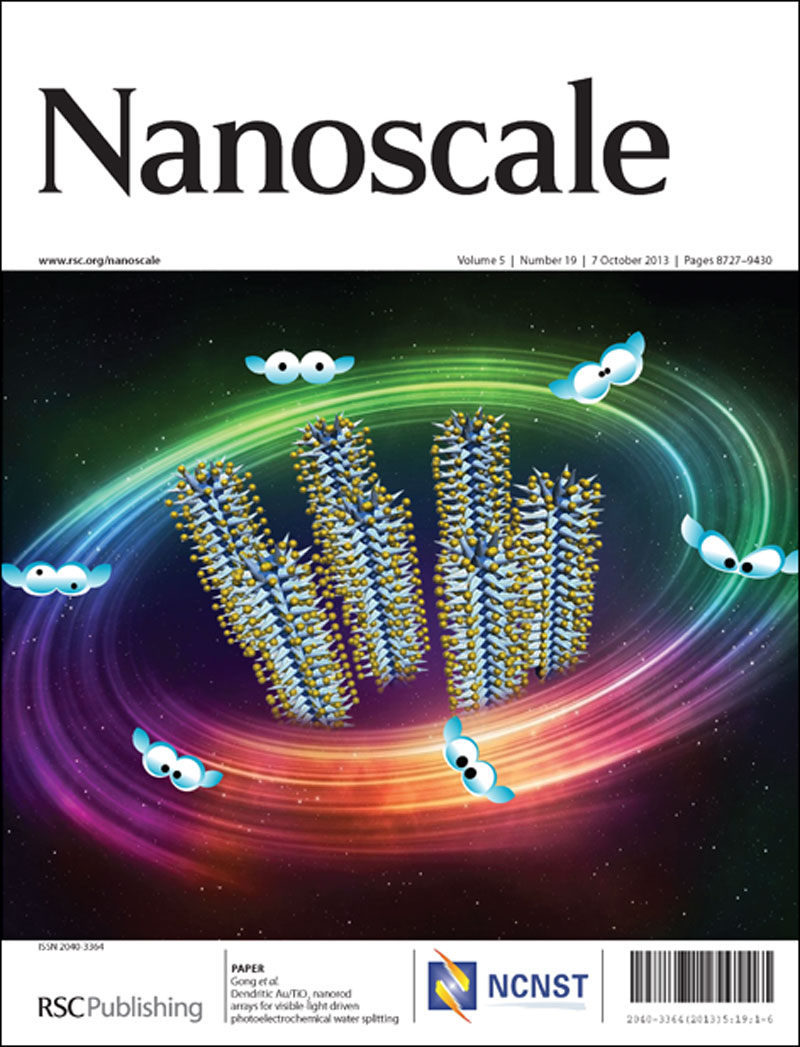
left is an image of this that ultimately translates to an artistic piece. Ultimately, this piece underlies the foundation of nature and its unique shapes and patterns that comprise our world today. The
bounds of reality begin to bend as we enter this realm of the more imaginary as
we cannot conceptualize these images or what they mean.
 |
| Blurring of Reality with the Nanoscale |
Vesna and her
coauthor, Gimzewski describe how nanotech and art collide to understand this
idea. The blurring between real and the imaginary on the nano scale stimulate
artistic interests as they venture into the unknown and attempt to understand
it from different perspectives. Nanotech and art have this commonality where
they both manipulate sensory perceptions (Gimsezki & Vesna). This world is no longer governed by the same physical rules witnessed in our everyday life.
Now, artists
have found the art behind nanotech and have created a new medium for work. For
example, Christian Orfescu works in a
nanotech lab on lithium ion batteries, however works on his ‘nanoart’ after a long day’s
work. He lets colors and shape-shifting run wild as he uniquely manipulates objects on the nanoscale (The). He has a
nanoart webpage that has pictures of his beautiful nanolandscape, nanodesign, and nanosculpture designs that I will embed below:
 |
| One of Orfescu's Nanoart Pieces |
Nanotechnology is quickly becoming integrated in our
daily lives and hopefully its tools will become more available to artists to
continue exploring this abstract form or art.
References
"The Art of Nanotech." Bits The
Art of Nanotech Comments. N.p., n.d. Web. 19 May 2016.
"Cris Orfescu." Cris Orfescu.
N.p., n.d. Web. 19 May 2016.
Gimzewski, Jim. Nanotech and Art Lecture.
Web. 19. May 2016.
Jim Gimzewski & Victoria Vesna. "The
Nanomeme Syndrome: Blurring of Fact & Fiction in the Construction of a New
Science." The Nanomeme Syndrome: Blurring of Fact & Fiction in
the Construction of a New Science. N.p., n.d. Web. 19 May 2016.
"Scanning Tunneling Microscopy." How
an STM Works. N.p., n.d. Web. 19 May 2016.
Vesna, Victoria, and Jim Gimzewski. "The
Nanomeme Syndrome: Blurring of Fact & Fiction in the Construction of a New
Science." The Nanomeme Syndrome: Blurring of Fact & Fiction in
the Construction of a New Science. N.p., n.d. Web. 19 May 2016.

I love all the images that you found for this blog post. The examples that you found really demonstrated your understanding of the topic this week! I agree that the topographical representation of the tunneling is definitely a form of art
ReplyDelete