 |
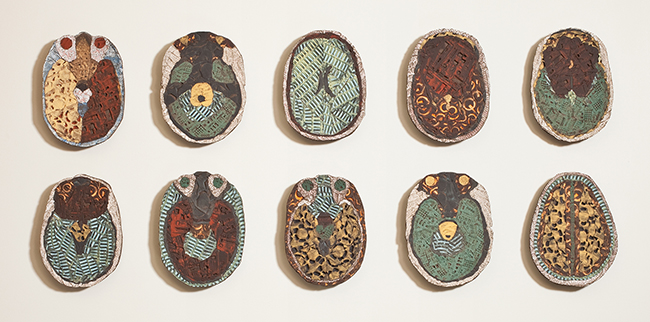
| MRI-Inspired Brain Sculptures |
Neuroscience is a recent field of research that has been
developing at a fast pace. As Roman Cajal said, this field breeds artists who
seek creativity and the unknown. Roman Cajal and Franz Gall were two key people
in showing how the brain functions (Vesna). Since their brain mapping and
further development, many artistic pieces have stemmed from our better
understanding of neuroscience. In the Stanford Imaging Center, for example,
there is a sculpture of the layers of a brain scan and an etching of the
hippocampus. (Artwork). The center is accessible to families and portrays how
there is beauty behind the brain; as a culture, we are more welcoming and more aware
of it.
As Giovanni Frazzetto and Suzanne Anker said in their article, there is an emerging ‘neuroculture’ where neuroscience is integrated in
all aspects of life. It is in TV, diagnosing disorders, and it is readily available
information that is commonly referenced (Frazzetto).
 |
| Painting by Alex Grey |
 |
| A Beautiful Mind |
It’s interesting to see now how these commonly diagnosed neurological disorders are
viewed in a more artistic light. Take for example the movie, A Beautiful Mind, centered around a schizophrenic man. The movie has won countless awards, including the Academy Award for Best Picture (Awards). These mental disorders used to be dismissed in the past,
and now center in movies and TV show dramas. They are not only portrayed in
artistic mediums but incorporated in the 'neuroculture'. Neurological disorders
and drugs that affect the way we think have influenced artists in countless
ways as well. The famous artist, Alex Grey, known for his paintings of the body’s meridians and chakras, used LSD and claimed that it helped boost his creativity and was influential in creating his works (8). Neuroscience and art ultimately mix
together in numerous ways. There are still so many unanswered questions in the
field of neuroscience, and artists are at the forefront of creativity and
excitement to find the answers.
References
"Artwork Inspired by MRI
Brain Scans Installed at Stanford Imaging Center." Stanford News. ssssssN.p., n.d. Web. 11 May 2016.
"Awards." IMDb.
IMDb.com, n.d. Web. 12 May 2016.
Frazzetto,
Giovanni, and Suzanne Anker. "Neuroculture." Science and Society 10 (2009): n. pag. sssssWeb. 11 May
2016.
Vesna, Victoria. Lecture Neuroscience
and Art. Web. 11 May 2016
"8 Famous People Whose
Creativity & Innovation Was Inspired By LSD." Collective Evolution ssssssRSS. N.p., n.d. Web. 11 May 2016.

A Beautiful Mind is such a significant movie in the way that it allows people to see what it is like to be inside the mind of someone who suffers with schizophrenia. In previous movies, and even other art mediums, mental disorders are so negatively portrayed and stigmatized, so this movie as well as a few others mentioned in lecture this week were really monumental in moving away from schizophrenia being so stigmatized.
ReplyDelete